
At what altitude do airplanes fly? Typical ceilings and factors affecting flight altitude.

Wondering what kind of planes fly that leave white streaks in the sky every day? Although we colloquially speak of "10 kilometers," the reality of aviation is much more nuanced.
From drones operating just above the ground, through massive cargo aircraft like the Boeing 747-8F, to spy structures in the stratosphere – each layer of the atmosphere is a separate highway.
In this article, we will explain what determines the altitude of an aircraft and why pilots choose flight parameters so precisely.
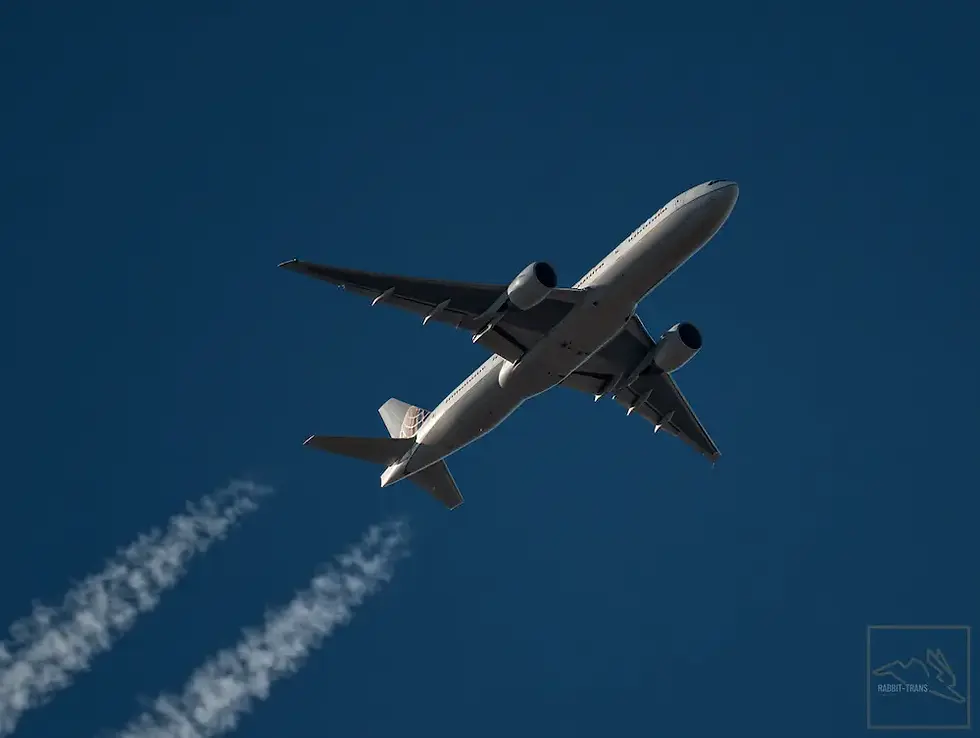
What is cruising altitude and why does it matter?
The precise vertical position of the machine is the result of a complex calculation. It's not a random decision, but a strategic balancing act between physics and economics.
Definition and range of typical cruising altitudes
Simply put, defined cruising altitude is the phase in which an aircraft maintains a constant level after completing a climb.
For modern jets, this is typically between 10 and 14 kilometers . This zone provides the conditions engineers prefer.
Optimal cruising altitude allows the engines to operate at peak efficiency and the airframe to generate minimal drag.
If the aircraft's cruising altitude were too low, the dense air would drag the fuselage, drastically increasing fuel consumption. Conversely, an altitude that is too high could result in a loss of lift.
Therefore, the typical cruising altitude is always the "golden mean" calculated by the on-board computer.
Differences between cruising altitude and flight level (FL)
In aviation, the term flight level (FL) is used , which differs from geometric height above the ground. Above a certain level, pilots set their altimeters to standard pressure (1013.25 hPa).
This ensures that, regardless of the local pressure, every aircraft has the same reference point.
This is crucial because flight altitude control based on FL guarantees safe separation of machines passing each other at high speed.
Flight Level (FL) | Height in feet (ft) | Height in meters (m) | Operational significance |
FL 095 | 9,500 ft | 2,900 m | A common limit for VFR (visual flight rules) flights before entering higher control zones. |
FL 100 | 10,000 ft | 3,050 m | Below this altitude, many countries have a speed limit of 250 knots; a safe ceiling for breathing without oxygen masks in an emergency. |
FL 180 | 18,000 ft | 5,500 m | Standard Transition Altitude in the USA; the limit above which the standard pressure of 1013 hPa is always set. |
FL 290 | 29,000 ft | 8,850 m | The beginning of the RVSM zone . From this level upwards, aircraft can fly with a separation of 1,000 feet (instead of the previous 2,000) if properly equipped. |
FL 310 | 31,000 ft | 9,450 m | Typical cruising ceiling for shorter passenger jet routes. |
FL 330 | 33,000 ft | 10,050 m | Popular cruising altitude (approx. 10 km above ground). |
FL 350 | 35,000 ft | 10,650 m | The "golden mean" for many narrow-body aircraft such as the Boeing 737 or Airbus A320. |
FL 370 | 37,000 ft | 11,300 m | High cruising altitude, often used on long-haul routes to save fuel. |
FL 390 | 39,000 ft | 11,900 m | Optimal level for lighter aircraft or at the end of a long flight (when the aircraft is lighter after burning fuel). |
FL 410 | 41,000 ft | 12,500 m | The upper limit of the RVSM zone ; the maximum operating ceiling for many passenger aircraft (e.g., B737, A320). |
FL 430 | 43,000 ft | 13,100 m | Maximum ceiling for modern wide-body aircraft (B787 Dreamliner, A350, B747-8). |
FL 450 | 45,000 ft | 13,700 m | Ceiling available mainly for business jets (e.g. Bombardier Global, Gulfstream). |
FL 510 | 51,000 ft | 15,550 m | Operating ceiling of some certified bizjets (e.g. Cessna Citation X). |
FL 600 | 60,000 ft | 18,300 m | Cruising altitude of the retired supersonic Concorde airliner. |
Flight altitude of passenger planes
This is where most of the action happens. Passenger planes and large freighters dominate the upper troposphere, creating a dense network of air corridors.
Typical ceilings for popular models (Boeing 737, Airbus A320, Dreamliner, A380)
Each aircraft has its own unique operating parameters. The aircraft's cruising altitude is directly dependent on its design, weight, and engine power.
Here's what a typical cruising altitude looks like for these giants of the skies:
Model airplane | Typical cruising altitude | Maximum ceiling |
Boeing 737-800 | 33,000 – 37,000 feet ( 10.1 – 11.3 km ) | 41,000 feet ( 12.5 km ) |
Airbus A320 | 33,000 – 39,000 feet ( 10.1 – 11.9 km ) | 39,000 – 41,000 feet ( 11.9 – 12.5 km ) |
Boeing 787 Dreamliner | 38,000 – 40,000 feet ( 11.6 – 12.2 km ) | 43,000 feet ( 13.1 km ) |
Airbus A380 | 35,000 – 43,000 feet ( 10.7 – 13.1 km ) | 43,000 feet ( 13.1 km ) |
Boeing 747-8F | 31,000 – 36,000 feet ( 9.4 – 11.0 km ) | 43,100 feet ( 13.1 km ) |
It's worth noting a pattern: Modern composite structures, such as the Boeing 787 Dreamliner , often operate higher than older models.
The Boeing 787 Dreamliner was designed to operate naturally at FL400 or FL410, allowing it to avoid most turbulence.
In turn, the powerful Airbus A380 , despite its dimensions, also copes well in thin air, and the cruising altitude of machines of this type often reaches 43,000 feet.
An interesting case in point is the cargo version of the Queen of the Skies – the Boeing 747-8F . This cargo giant, often loaded to capacity (maximum takeoff weight is over 440 tons!), initially occupies lower flight levels .
Only after it burns some of its fuel can the Boeing 747-8F climb higher. Despite this, the Boeing 747-8F remains one of the fastest and highest-flying aircraft in its class.
Similarly, the classic Boeing 747 and Boeing 737 have their own specific altitude "windows." These specific altitudes are assigned by controllers.
Why do passenger planes fly at an altitude of 10–13 km?
Why 10-14 kilometers? Is this a compromise zone?
Economics: Thinner air means less drag. Cruising at this altitude allows for fuel consumption reductions of tens of percent.
Weather: Most weather phenomena remain below. Aircraft cruising altitudes of 11-12 km allow them to fly "above the weather," which increases passenger comfort.
Safety: In the event of an engine failure, typical cruising altitude gives pilots time (up to 30 minutes of gliding) to plan an emergency landing.

Flight altitude of military aircraft
Where civilian aircraft reach their highest altitudes , the military is just getting started. Here, flight altitude is a key element of survival tactics.
Reconnaissance aircraft and their extreme altitudes (U-2, SR-71)
The legendary Lockheed U-2 operates at the edge of the stratosphere, above 21 km. The SR-71 Blackbird holds the absolute record, reaching a flight altitude of nearly 26 km. At this altitude, the sky is already pitch black, and the curvature of the Earth is clearly visible.
Fighters and Bombers – Operational Flight Altitudes (F-22, B-52)
Modern fighter jets, such as the F-22 Raptor, use their high flight altitude (up to 20 km ) for energy dominance.
Strategic bombers, such as the B-52, operate at a slightly lower altitude (about 15 km) , which is sufficient for precision munitions. In both cases, the aircraft's flight altitude is crucial for the weapon's range.
At what altitude can drones fly?
This is where we enter the AGL (Above Ground Level) zone. For civilian drones, the key limit is 120 meters AGL.
The mandatory flight altitude for open category flights is 120 meters. This is intended to provide separation from manned aviation.
However, there are exceptions. If you are monitoring aviation obstacles (e.g., inspecting a tall chimney), the law allows you to fly above 120 meters , provided the drone remains within 50 meters of the obstacle and does not climb higher than 15 meters above its summit.
Monitoring aerial obstacles is becoming an increasingly important task for industrial drones, which requires flexibility in AGL (Above Ground Level) regulations.
At what altitude do helicopters fly?
Helicopters operate at low altitudes, where airflow through the rotor is efficient. They typically operate at altitudes of up to 3-4 km.
The records are impressive, however – Jean Boulet reached a flight altitude of over 12 km in a helicopter , but in normal operating conditions passenger planes fly much higher than any helicopter.
At what altitude do balloons fly?
Tourist balloons fly low to admire the views. However, research balloons are in a different league.
Some of them are ships that reach the highest altitude of all objects flying in the atmosphere (excluding rockets), reaching up to 40-50 km above the ground.
At what altitude do satellites fly?
Above 100 km, space begins. Low Earth Orbit (LEO) is the domain of the ISS (approximately 400 km).
GPS satellites orbit much higher (MEO – 20,200 km), and geostationary satellites "hang" at 36,000 km. Here we are no longer talking about AGL (Above Ground Level) , but about orbital mechanics.
What factors influence a pilot's choice of flight altitude?
Deciding which flight level to choose is a complicated equation.
Aerodynamic drag and lift
The higher you go, the thinner the air becomes. This reduces drag, but also lift. Flight altitude therefore depends on weight – a heavy Boeing 747-8F or a loaded Boeing 787 Dreamliner won't immediately reach maximum altitude. It must burn fuel to become lighter.
Fuel consumption and economic efficiency
Airlines are looking to save money. Aircraft cruising altitudes are adjusted to use the least amount of kerosene possible for a given weight and wind conditions.
This often means that an Airbus A380 or Boeing 787 Dreamliner performs a so-called "step climb" – a gradual ascent as the weight decreases.
Passenger comfort and avoiding turbulence
If the flight level is turbulent, the pilot requests a change. Often, the choice of flight altitude is dictated by the desire to provide passengers with a smooth ride, even at the cost of a slight increase in fuel consumption.
Atmospheric conditions and the presence of cumulonimbus clouds
Powerful storms are an impenetrable wall. Sometimes their peaks reach above the altitude at which passenger planes operate.
In such cases, the only option is to avoid the storm sideways, not overhead. In the tropics, aircraft often lack sufficient altitude to clear the cloud tops.

Safety and flight altitude regulations
The sky is divided into sectors. Air traffic control ensures that everyone has their place.
The role of air traffic control
The controller ultimately decides. The pilot can request a change, but ground crews' control of flight altitude takes precedence. This ensures separation between aircraft—for example, between a westbound Airbus A380 and a passing Boeing 747 .
Hemispheric Rule and Flight Level Assignment
To avoid collisions, simple rules apply.
The applicable flight height depends on the course:
Eastbound = odd levels (e.g. FL350).
Westbound = even levels (e.g. FL360).
This allows specific heights to be naturally separated.
Cabin pressurization and emergency procedures (decompression, oxygen masks)
At an altitude of 10 km, a person loses consciousness in a matter of seconds. That's why cabins are pressurized.
In the event of decompression, the flight altitude is immediately lowered to a safe 3,000 meters (10,000 feet), where you can breathe without masks.
Cruising speed and flight altitude
Cruising speed is closely related to altitude.
Typical speeds at different altitudes and what influences them?
At an altitude of 11 km, the passenger plane's ground speed is approximately 900 km/h. However, the instruments in the cockpit indicate significantly less.
This is a result of thin air. Interestingly, the aircraft's (true) speed increases with altitude for the same engine thrust.
Relationship between speed and fuel consumption
There is a point at which cruising speed is most economical. We fly where the airflow offers the least resistance while maintaining adequate lift.
How to monitor the flight altitude of a passenger plane
Today, everyone can check what planes are flying in their area.
Using the Flightradar24 app
The Flightradar24 app is a powerful tool. It shows not only the position but also the cruising altitude of aircraft in real time.
There, you can see a Boeing 747-8F laboriously climbing with cargo while a lightweight Airbus A320 quickly reaches its target altitude. Flightradar24 often reports a "calibrated" altitude (based on standard pressure), which is worth keeping in mind.
Interpretation of flight level (FL) data
When you see FL380 on your screen, you know the aircraft's cruising altitude is 38,000 feet. This is standard aviation parlance.
Other interesting facts about flight altitude
The world above the clouds holds many secrets, and different flight altitudes are governed by different laws.
Layers of the atmosphere and flight altitude
Troposphere and stratosphere flights
Most flights take place in the upper troposphere. However, aircraft reach their highest altitudes in the lower stratosphere, where the air is calmest. Aircraft such as the Boeing 787 Dreamliner or Airbus A380 often "lick" the stratosphere's edge.
The influence of atmospheric conditions on the choice of ceiling
In winter, the tropopause is lower. This means that passenger planes enter the calm air zone of the stratosphere more quickly than in summer. Therefore , flight altitude also depends on the season.
Flight altitude and emergency situations
Drift-down profile
When one engine fails, an aircraft (e.g., a twin-engine Boeing 787 Dreamliner ) cannot maintain a high altitude.
It must perform a drift down maneuver—a controlled descent of the aircraft's flight altitude to a level where a single engine is sufficient for level flight. These are often lower flight levels , in the range of FL200-FL250.
The importance of an appropriate ceiling for operational security
A high flight altitude provides a safety buffer. It provides glide time and range. That's why pilots so readily choose altitudes at the upper end of the aircraft's capabilities.
However, sometimes air traffic control forces a flight below the optimal altitude due to sky congestion. In such cases , the chosen altitude is a compromise between the pilot's wishes and the system's capabilities.
It also happens that due to different altitude restrictions in military zones, civilian aircraft must fly below certain altitudes .
Additionally, monitoring aviation obstacles (e.g. tall buildings or masts) is crucial for the safety of operations at low altitudes, where AGL (Above Ground Level) is critical.
Pilots of machines such as helicopters or drones must be particularly sensitive to AGL (Above Ground Level) , as any mistake may result in a collision.

FAQ: Get instant answers to your flight altitude questions
Many myths and half-truths surround cruising altitudes. Below, you'll find specific, soldier-like answers to frequently asked questions that will dispel your doubts and provide you with interesting facts that will make you shine in the crowd.
Why do passenger planes fly at about 10-12 km? : To reduce air resistance (less fuel consumption) and fly above most storms.
What is the absolute altitude record for a passenger plane? : Concorde regularly flew at 18,300 m (60,000 ft).
At what altitude do recreational drones fly? : The legal limit in the open category is 120 meters above the ground (AGL).
What is AGL? : Height measured from ground level (Above Ground Level).
What is MSL? : Height measured from Mean Sea Level (MSL).
Is it possible to open an airplane door at cruising altitude? : Physically impossible due to the huge pressure difference pressing the door against the frame.
What is "Coffin Corner"? : The altitude at which the minimum (stall) and maximum (critical Mach number) airspeeds are almost identical.
How much time do I have to put on my mask after decompression at 11 km?: Just 30–60 seconds (so-called Time of Useful Consciousness).
At what altitude do helicopters fly? : Usually below 3,000 m, although the record is over 12,400 m.
Can birds fly at the height of airplanes? : Yes, a spotted vulture collided with a plane at an altitude of 11,300 m.
What does FL350 mean? : Flight level 350, which is nominal 35,000 feet at standard pressure.
Why are airplane windows small and round? : To evenly distribute the stresses on the fuselage resulting from the pressure difference.
What is the temperature at an altitude of 10 km? : On average, around -50°C to -60°C.
Is there radiation at cruising altitude? : Yes, the dose of cosmic radiation is higher than on earth, but safe for passengers.
What is "Drift Down"? : The procedure for slowly descending to a safe altitude after one of the engines fails.
At what altitude does the atmosphere end and space begin? : The conventional boundary is the Kármán Line at an altitude of 100 km.
How high do weather balloons fly? : They can reach up to 30–40 km, bursting only in the stratosphere.
Why do planes flying east have different altitudes than those flying west? : To avoid head-on collisions (hemispheric rule: odd numbers east, even numbers west).
Can thunderstorms reach higher than airplanes? : Yes, in the tropics, cumulonimbus clouds can reach up to 18–20 km.
At what altitude does the International Space Station (ISS) fly?: About 400 km above Earth (in LEO).
Can a plane fly into a volcanic ash cloud? : Absolutely not, the ash melts in the engines and can stop them (which is why they are avoided by a wide margin).
What is RVSM? : A zone of reduced vertical separation where aircraft can fly every 1,000 feet (approx. 300 m) vertically.
What military aircraft flew the highest? : Officially the SR-71 Blackbird (over 25,900 m), unofficially the X-15 (over 100 km, but it's a rocket plane).
Will my GPS phone show the exact altitude in an airplane? : Yes, it will give the geometric altitude (GPS), which may be different from the barometric altitude used by pilots.
Why are the lights dimmed during landing? : This is to allow passengers' eyes to adjust to the darkness in case of an evacuation.
What is cabin pressure? : The artificially maintained pressure inside an aircraft, corresponding to the conditions at an altitude of approximately 2,400 m above sea level.
Can gliders fly in the stratosphere? : Yes, the Perlan II project reached an altitude of over 23 km using mountain waves.
At what altitude do GPS satellites fly?: In medium Earth orbit (MEO), approximately 20,200 km.
When does a pilot use QNH? : Below the transition altitude (usually at takeoff and landing) to know the real distance from the terrain.
What does "obstacle monitoring" mean for a drone? : An exception allows you to fly a drone higher than 120 m if you are close to a tall object (e.g. a chimney) with the owner's consent.


Comments