
Peoples of Russia: Ethnic and Cultural Structure of the Russian Federation

The Russian Federation is an ethnic colossus where over 190 national groups live side by side, creating one of the most complex demographic puzzles in the world.
However, the peoples of Russia are currently undergoing a tumultuous transformation, and the latest census data reveal disturbing gaps in our knowledge of this society.
In this article, we will look at hard data and cultural nuances to understand who really inhabits this vast country today.
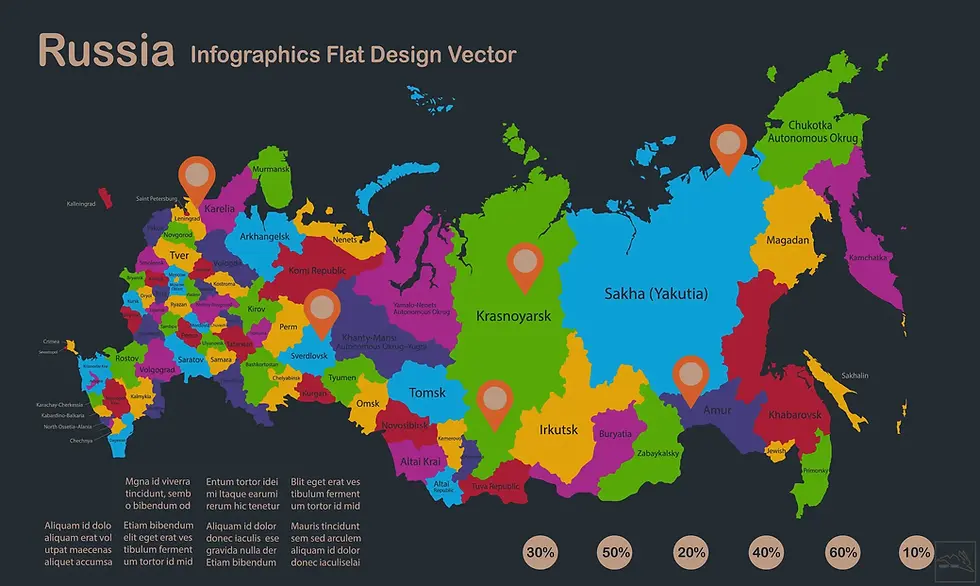
Ethnic composition of the Russian Federation
Before we delve into the detailed statistics of individual groups, it is worth looking at the demographic picture as a whole.
Russia has for centuries defined itself as a multinational state, as evidenced by data on hundreds of distinct identities. However, the latest All-Russian Population Census of 2021 raised more questions than answers.
We are dealing with an unprecedented phenomenon: as many as 16.6 million people in Russia have not declared their nationality.
This enormous "gray zone" makes it a challenge for demographers to precisely determine the number of ethnic minorities in Russia .
Russia's population is known, but its internal structure is becoming increasingly mysterious. Below, we analyze the situation of the biggest players in this scene.
Russians as the dominant ethnic group
Do Russians still dominate numerically? Yes, but their advantage is diminishing. Ethnic Russians now constitute approximately 71.7% of the total population.
If we consider only those who declared their origin, this percentage rises to 80.8%. It is the East Slavs – and especially the Russians – who constitute the core of the state.
However, the absolute numbers leave no doubt about the downward trend:
2010: 111 million Russians.
2021: 105.6 million Russians.
The loss of over 5 million people in a decade is a significant shift in Russia's ethnic history . Despite this, the 2020 amendment to the Constitution reaffirmed the status of Russians as a "state-building nation."
Russian culture and literature are promoted as a glue connecting the different regions of Russia , from Kaliningrad to Vladivostok.
Tatars and their role in Russian society
Tatars maintain their position as the largest minority, numbering 4.71 million . However, let's take a closer look at the dynamics of change: compared to 2010, their number has fallen by nearly 600,000.
This sparked heated debate in Tatar circles. Despite this, Tatar culture remains remarkably vibrant.
Tatars – living mainly in Tatarstan and the Volgo-Ural region – are a well-organized community.
Their elites ensure the Tatar language is present in public spaces. Thanks to their republic's strong economic position, they serve a unique function as a bridge connecting European Russia with the Turkic world and Islam.
Chechens and other peoples of the North Caucasus
While most of the country is struggling with low temperatures, southern Russia —specifically the North Caucasus—is experiencing a boom. The nations of the North Caucasus are experiencing steady growth.
Chechens are one of the fastest growing groups – their population has jumped from 1.43 million to 1.67 million .
The region is becoming increasingly ethnically homogeneous, and Chechen culture is experiencing a renaissance. Both the Chechen Republic and neighboring Ingushetia are nearly monoethnic areas.
The Ingush , close relatives of the Chechens, are also strengthening their identity, and Ingush culture, based on clans and Sunni Islam, is the foundation of social life. The Chechen language plays an important role here, being widely used in everyday life.
Bashkirs and their relationship with the Tatars
The Bashkirs are a Turkic people numbering approximately 1.57 million , concentrated primarily in the Republic of Bashkortostan. Their relationship with the Tatars is a fascinating mix of closeness and rivalry.
The Bashkir and Tatar languages are so similar that they allow for free communication, which paradoxically complicates identity issues.
The authorities in Ufa are pursuing an active policy of differentiation, promoting the unique identity that Bashkir culture carries.
Disputes over dialects and nationality are a constant feature of local politics, but both groups share a common history and religion.
Dagestanis: the ethnic mosaic of the South Caucasus
Dagestan is a real phenomenon – there is no single dominant group here.
This is a region where Dagestani culture is, in fact, the sum of many traditions. Here's what that puzzle (the so-called Dagestanis ) looks like:
Avars: The leaders of the statistics (approximately 30.5% in the republic), whose Avar culture is renowned for its bravery and poetry.
Dargins: The second largest ethnic group in the region (16.6%), the Dargin culture is known for its artistic crafts.
Kumyks: Turkic people from the lowlands (15.8%), cultivating steppe traditions carried by the Kumyk culture .
Lezgins: A group living in the south (13.3%), divided by the border with Azerbaijan.
How do these people communicate? Russian remains neutral ground, although national languages are cultivated at home.
Yakuts, Buryats and other peoples of Siberia
In the east of the country, where the eastern part of Russia extends, the situation is different. The peoples of Siberia are diverse.
The Yakuts (Sakha) stand out as the largest indigenous group, numbering 478,000. In the Sakha Republic, they constitute 55.3% of the population, and the Yakut language and culture are flourishing.
Another important group is the Buryats , a Mongolian people living around Lake Baikal. Buryat culture is strongly associated with Tibetan Buddhism and shamanism.
Tuva is also not to be missed – the Tuvans (approximately 300,000 in number) are renowned for preserving their traditional lifestyle. Tuvan culture and the incredible Tuvan music (throat singing) are known worldwide.
Alongside them live smaller peoples, such as the Evenki . Although fewer in number, the Evenki culture, based on reindeer herding, is a symbol of survival in the taiga. Unfortunately, the Evenki language is in danger of disappearing.
Mariians, Komi and other Finno-Ugric peoples
The situation facing the Finno-Ugric peoples in the Volga-Ural region is alarming.
Data from 2021 shows drastic declines:
Mari: -22%. Mari culture, however, is unique – they are "the last pagans of Europe."
Komi: -17%. Both Komi culture and the Komi language are losing speakers to Russian.
Mordvins and Chuvash: They are also in decline. The Chuvash (a Turkic nation, but Orthodox) and Mordvin cultures are struggling with intense assimilation.
Ukrainians, Belarusians and Poles as Slavic minorities
Slavic minorities are "disappearing" the fastest. Cultural proximity to Russians means assimilation is proceeding rapidly.
Ukrainians : A drop from 1.93 million (2010) to only 884 thousand (2021).
Belarusians: Their number has also decreased drastically.
Poles: Population shrank to just over 22,000.
The conflict in Ukraine means that citizens of the Russian Federation with Ukrainian roots often prefer not to declare their separateness.
Other groups: Kazakhs and migration
In border regions (e.g. European Russia in the southeast), Kazakhs constitute a significant group.
Kazakh culture is visible in regions such as Astrakhan and Orenburg, which is a reminder of how fluid Russia's borders can be in a cultural sense.

The linguistic diversity of the peoples of Russia
In a country spanning eleven time zones, language is more than just a tool of communication – it is a binder and a marker of status.
Although dozens of dialects can be heard in homes from the Caucasus to Chukotka, official language policy creates a clear hierarchy that determines the daily lives and educational opportunities of millions of citizens.
Russian as a lingua franca and a tool for integration
The Russian language holds the status of the foundation of statehood. As the official language of Russia at the federal level, it binds this vast country together. The constitution designates it as "the language of the state-forming nation."
The Russian language plays a key role in education, business and administration, ensuring communication between Kaliningrad and Chukotka.
The Russian language is widespread – it is spoken by almost all of the 147 million inhabitants (the official population of Russia ).
Minority languages and their regional status
Theoretically, republics have the right to establish their own state languages. Dagestan has a dozen, while Tatarstan promotes Tatar.
Russia's linguistic diversity is impressive on paper, but in practice, the dominance of the Russian language is undisputed. Local languages often lose out when faced with the administrative machinery and globalization.
Challenges in protecting minority languages
The protection of minority languages encounters barriers. Since 2018, teaching regional languages in schools has been voluntary.
Experts are sounding the alarm: East Slavic languages (other than Russian) and indigenous languages are losing their speakers. UNESCO classifies over 130 languages in Russia as endangered.

Culture and national traditions in Russia
The identity of the peoples of Russia is most fully revealed not in official forms, but in living folklore and customs cultivated for centuries.
From steppe horse races, through Caucasian war dances, to mystical rituals in the Siberian taiga – the wealth of traditions here is staggering.
Here is a look at the most colorful holidays that have withstood the test of time and the pressures of unification.
Sabantuy and Tatar-Bashkir culture
When spring sowing ends, it's time for Sabantuy ("Plow Festival"), an explosion of joy for life celebrated by Tatars and Bashkirs.
If you happen to come across Sabantuy's festival, you will see:
Fierce competition in belt wrestling ( kuresh ).
Horse racing.
Traditional arcade games.
Today, Sabantuy is a showcase for the cultures of the peoples of Russia on the international stage.
Lezginka and the heritage of the peoples of the Caucasus
It's impossible to understand the Caucasus without seeing the Lezginka dance. It's more than folklore; it's a manifestation of temperament.
In the dance, the man is an eagle—performing acrobatics on his toes. The woman floats like a swan. Lezginka unites the ethnic groups of Russia inhabiting the Caucasus, serving as a common denominator for Chechens and Lezgins.
Ysyach and Yakut culture
During the summer solstice, Yakutia celebrates its New Year, or Ysyach . This is a mystical ceremony during which Siberian culture reveals its most beautiful side.
The focal point is the drinking of kumiss and the mass Ohuokhai round dance. This is evidence of how strong the traditions of the Russian peoples are in the Far East.
Tuvan music and Siberian traditions
The Republic of Tuva gave the world Tuvan music , specifically throat singing ( Khoomei ).
This technique allows the artist to produce several sounds simultaneously. It is a unique heritage, deeply rooted in animism.
Nature rites of the Mari and Evenki
The Mari still offer sacrifices in sacred groves, cultivating the faith of their ancestors. Meanwhile, the Evenks cultivate their faith in nature spirits in the taiga. These ancestral beliefs demonstrate the diversity of the regions of the Russian Federation .
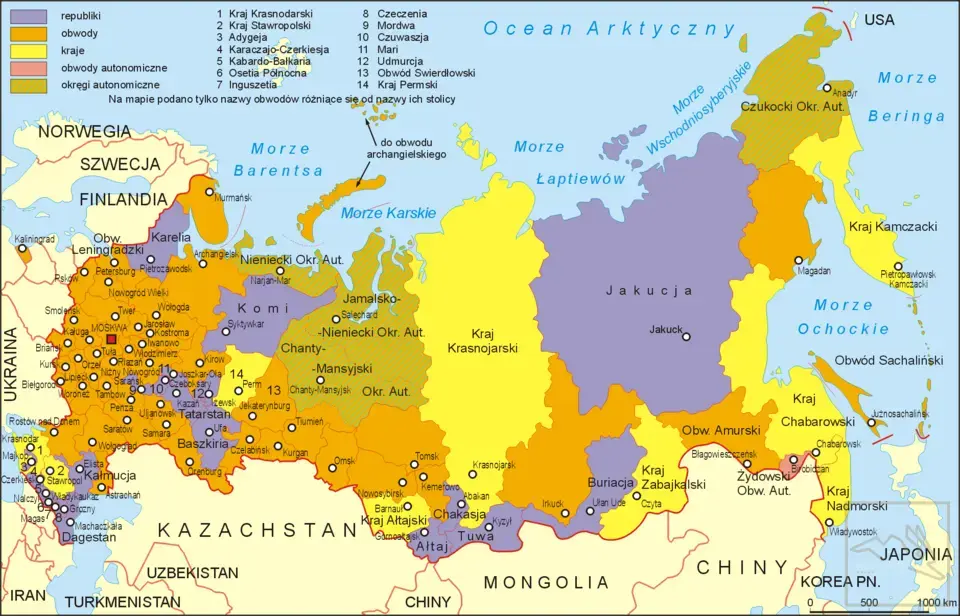
The federal system and the management of ethnic diversity in the Russian Federation
Managing such a diverse state organism requires balancing the need for centralization with local specificity.
The relationship between Moscow and the capitals of the national republics is dynamic and full of tension.
Let's see how the Russian political model has evolved and what it means today for the autonomy of individual regions.
Federalism in Russia and the autonomy of ethnic regions
Russian federalism has come a long way – from the great freedom of the 1990s to today's "vertical power".
The history of the Russian Empire teaches us that centralization always returns. Currently, the political autonomy of the regions is weakening. Tatarstan was the last bastion to change its leader's title from "president" to "Head of the Republic" in 2023.
The borders of the Russian state encompass a vast territory, but power is concentrated in Moscow. Russia's largest cities become a melting pot in which local differences often disappear.
Language policy and protection of cultural heritage
The new national policy strategy emphasizes unity. Although the documents speak of protecting diversity, in practice they promote an "all-Russian identity."
Ethnic issues are sometimes perceived as a risk. It's also worth noting that the Russian Republic of Crimea appears in the political narrative, introducing additional elements into the ethnic mosaic (Crimean Tatars).
Demographic changes and Russification processes
Demographics rarely stand still, and in the case of Russia these processes have accelerated remarkably in recent years.
We are witnessing phenomena that are radically changing the country's ethnic makeup. Assimilation and Russification are powerful mechanisms that, for some, represent a chance for social advancement, while for others, they signal the end of centuries of separateness.
Decline in the number of Slavic minorities
The dramatic shrinking of the population of Ukrainians and Belarusians is a fact.
The reasons? Assimilation, lack of institutional support, and politics. Many immigrants prefer to blend in with the Russian majority.
The dominance of the Russian language and national identity
Promoting monolingualism accelerates Russification. As Russian dominates the media and government, the native language is relegated to the status of folklore. As a result, younger generations lose cultural continuity.
The importance of Russia's nations for state identity
Finally, it is worth asking a fundamental question: what role does this multi-colored mosaic play in modern Russian statehood?
Is the declared multinationality the true foundation of the state's strength, or is it merely a facade concealing deep divisions and challenges that the Kremlin must face?
Ethnic mosaic as an element of the Federation's unity
The Kremlin's official narrative is consistent: Russia is a unique civilization. Vladimir Putin emphasizes that interethnic harmony is essential for the state's survival.
Contemporary challenges for a multiethnic society
The reality, however, is complex. Russia faces challenges: the depopulation of its core regions, the growing importance of the Caucasus, and tensions.
Disappearing minorities suggest that beneath the surface of "unity" there are processes taking place that may lead to the loss of a unique heritage.

FAQ: A compendium of knowledge about the nations and ethnicities of the Russian Federation
What is the current population of Russia? : According to recent data, the population of Russia is approximately 147 million, although Russia's population is declining in many regions.
Who constitutes the ethnic majority in the country? : Russians constitute over 80% of the declared population, and as East Slavs they are the foundation of statehood.
How rich is Russia's ethnic mosaic?: Incredibly. Russia 's population comprises over 190 groups, making it a unique cultural melting pot.
What is the status of the Russian language? : The official language of Russia is Russian. Russian has the status of a state language and unites individual regions of Russia .
What is the importance of the Russian language for integration? : Russian plays a key role in administration and education, and the dominance of Russian ensures communication between all groups.
Where is the Russian language spoken? : The Russian language is spoken throughout the country, from the European part of Russia to the eastern part of Russia .
Who are Russia's largest ethnic minorities? : The largest groups include Tatars (approx. 4.7 million), Chechens , Bashkirs , and Chuvash .
What is Russian culture? : Russian culture is the foundation of the country's identity, which includes, among other things, world-famous Russian literature and Orthodox Christianity.
Where do Tatars live? : Tatars live mainly in Tatarstan and the regions of the Russian Federation in the Volga basin.
What is Tatar culture famous for? : Tatar culture is known for its strong Islamic traditions and the Sabantuy holiday.
What is the status of the Tatar language? : The Tatar language is one of the most important national languages and is taught in schools in Tatarstan.
Who are the Bashkirs? : The Bashkirs are a Turkic people from the Urals, and the Bashkir culture is famous for its honey production and epics.
Is the Bashkir language similar to Tatar? : Yes, the Bashkir language is closely related to Tatar, but has unique phonetic features.
Who inhabits the North Caucasus?: The North Caucasus peoples dominate here, such as the Chechens , Ingush , Avars and Dargins .
How dynamically are Chechens growing? : Chechens are one of the fastest growing groups, and Chechen culture is experiencing a religious and traditional renaissance.
Is the Chechen language popular? : Yes, the Chechen language is widely used in everyday life in the Chechen Republic.
What makes Ingush culture unique? : Ingush are close to Chechens, and Ingush culture is based on clan structures and Islam.
Why is Dagestan unique? : Because Dagestanis live there – a collective name for many nations; Dagestani culture is a mosaic of many traditions.
Who are the Avars? : Avars are the largest group in Dagestan, and Avar culture is famous for its rich folk poetry.
What are the Dargins known for? : The Dargins are famous for their crafts, and the Dargin culture (especially from the village of Kubachi) is a mastery of metalworking.
Where do the Kumyks live? : The Kumyks inhabit the lowlands of Dagestan, and the Kumyk culture brings the traditions of the Turkic peoples to the Caucasus.
What is Lezginka? : Lezginka is a dynamic folk dance that unites all the peoples of the Caucasus and is a calling card of the region of Southern Russia .
What are the indigenous peoples of Siberia?: The most important are the Yakuts , Buryats , Tuvans , and Evenks .
What characterizes Yakut culture? : Yakut culture is strongly connected with nature, and its symbol is the Ysyach holiday.
Is the Yakut language endangered? : No, the Yakut (Sakha) language has a strong position in the region and culture.
Who are the Buryats? : The Buryats are a Mongolian people who practice Buddhism, and the Buryat culture is centered around Lake Baikal.
What is Tuvan culture famous for? : Tuvan culture is known worldwide for its unique throat singing ( Tuvan music ).
Who are the Tuvans? : The Tuvans are the inhabitants of the Republic of Tuva who have preserved their traditional pastoral lifestyle.
Where do the Evenks live? : The Evenks are scattered throughout the taiga, and the Evenk culture is based on reindeer herding; unfortunately, the Evenk language is disappearing.
What is Siberian culture? : Siberian culture is a broad term encompassing the traditions of the indigenous peoples and Russian settlers east of the Urals.
Who are the Finno-Ugric peoples in Russia?: These include the Mari , Komi , Mordvins , and Karelians .
What makes Mari people unique? : Mari people are called the "last pagans of Europe" because Mari culture has preserved its original beliefs.
What is the situation of the Komi people? : The Komi live in the north, but the Komi culture and language are rapidly being Russified.
Who are the Chuvash? : The Chuvash are a Turkic people who profess Orthodox Christianity, and the Chuvash culture is a unique bridge between the Slavic and Turkic worlds.
Where do Kazakhs live in Russia? : Kazakhs live in large numbers in the border areas where Kazakh culture is strongly present.
Why is the number of Ukrainians in Russia decreasing? : Ukrainians are rapidly assimilating, and the political conflict makes them less likely to declare their nationality.
What is happening to Belarusians? : Belarusians , like Ukrainians, are quickly integrating with the Russian majority, which is why their statistical number is decreasing.
Are East Slavic languages protected? : Theoretically yes, but in practice other East Slavic languages are being displaced by Russian.
What does the protection of minority languages look like? : Protecting minority languages is a challenge, as education promotes Russia's linguistic diversity mainly in theory.
How Have Russia's Borders Changed? : Russia's borders have evolved over the centuries, as described by the history of the Russian Empire and its territorial expansion.
What influence do the largest cities of Russia have? : The largest cities of Russia (Moscow, St. Petersburg) act as melting pots in which ethnic differences disappear.
What is "European Russia"? : It is a densely populated part of the country up to the Ural Mountains, where Russians and the cultures of the peoples of Russia of the Volga region predominate.
What is "eastern Russia"? : It is Siberia and the Far East, an area rich in raw materials where few but unique nations live.
How does history influence ethnicity? : The ethnic history of Russia is the processes of migration and resettlement that have shaped the current citizens of the Russian Federation .
What are the traditions of the peoples of Russia? : The traditions of the peoples of Russia are a wealth of holidays, costumes and rituals that define local identity.
What is the role of the "Russian Republic of Crimea"? : The annexation of Crimea and the creation of the entity Russian Republic of Crimea (internationally unrecognized) added, among others, Crimean Tatars to the statistics.
What are the borders of the Russian state? : The borders of the Russian state are guarded by armed forces, and within them live one of the largest multi-ethnic populations in the world.


Comments